
When your child's living situation, school, and daily routine hang in the balance, every decision you make matters. Whether you are navigating a divorce, filing a standalone custody case, or trying to modify an existing order, having the right San Antonio child custody lawyer on your side can shape your family's future for years to come. Lopez Lawyers is here to help you protect what matters most-your time with your child and their safety and stability.
Key Takeaways
-
Lopez Lawyers handles the full range of child custody cases in San Antonio and Bexar County, including contested and uncontested conservatorship, modifications, enforcement, and emergency protective orders. David Lopez is a Texas family law attorney focused on Divorce, Child Custody, Property Division, and Child Support, with offices in both Dallas and San Antonio serving clients statewide.
-
Texas uses "conservatorship," not "full custody." Child custody is legally referred to as conservatorship in Texas. Texas courts prefer joint conservatorship for child custody, and judges decide child custody arrangements based on the child's best interests-including safety, stability, and each parent's involvement.
-
Many parents resolve custody through negotiation or mediation rather than a trial, saving time, money, and emotional energy. But when the other parent is uncooperative or your child is at risk, Lopez Lawyers is prepared to litigate aggressively in Bexar County courts.
-
Early legal action matters. Temporary orders can go into place within weeks, setting the tone for where your child lives and who makes decisions during the case.
-
Ready to talk? Call (469) 399-0469 or message us online for a confidential child custody consultation with our dedicated team.
Why Hire a San Antonio Child Custody Lawyer at Lopez Lawyers?
Child custody disputes are among the most emotionally draining experiences a parent can face. If you live in San Antonio or nearby communities like Alamo Heights, Stone Oak, Leon Valley, or Universal City, you need more than a generic attorney-you need a child custody lawyer who understands how Bexar County judges apply the law in real-world custody cases.
A local attorney knows which judges tend to favor expanded possession schedules, how mediation is handled in Bexar County family courts, and what evidence carries the most weight when determining custody. A custody lawyer's role extends beyond litigation to explain court processes, prepare you for hearings, and guide informed decisions at every stage.
David Lopez focuses his practice on Texas family law-specifically child custody, divorce, child support, and property division. His experience covers everything from emergency temporary orders and relocations to complex parenting schedules involving military families and high-conflict disputes. Effective counsel can influence who has primary residence rights, how many overnights each parent receives, and how educational decisions, medical choices, and other major issues are handled.
Don't wait until the other parent makes the first move. Call (469) 399-0469 now to speak directly with our team, or reach us 24/7 through our online contact page.
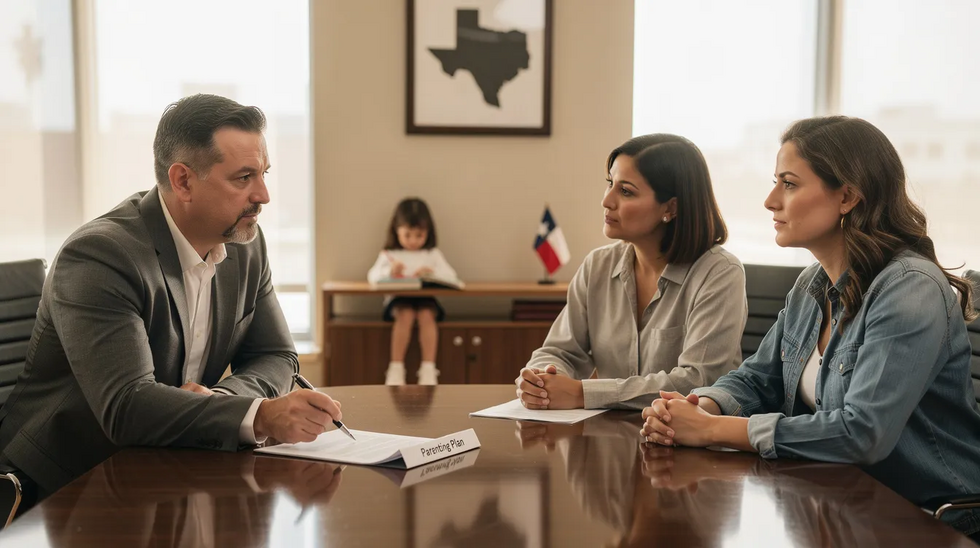
Understanding Child Custody (Conservatorship) in Texas
In Texas, "child custody" is called "conservatorship." The texas family code divides parental roles into two categories: rights (decision-making authority over things like education, healthcare, and residence) and duties (day-to-day care and support). Texas recognizes joint and sole managing conservatorship, and courts can assign these responsibilities to one or both parents.
Joint managing conservatorship is the default presumption under Texas Family Code § 153.131. Joint conservatorship allows shared rights and responsibilities between both parents. Under this arrangement, both parents participate in major decisions, though one parent is typically designated with the exclusive right to determine the child's primary residence.
Sole managing conservatorship is reserved for situations where joint management would harm the child-such as cases involving family violence, neglect, or severe substance abuse. Sole conservatorship grants one parent exclusive rights over decisions like schooling, medical treatment, and where the child lives.
Even when one parent is named possessory conservator with limited decision-making authority, they typically retain visitation rights and the right to receive school and medical information. Lopez Lawyers helps you understand exactly how these labels affect your daily life and parenting time in Bexar County and beyond.
Types of Child Custody Arrangements in San Antonio, TX
Child custody arrangements can be tailored to each family, but most San Antonio child custody cases follow a few common structures:
-
Joint managing conservatorship with Standard Possession Order (SPO): The most common arrangement, where both parents share decision-making and the non-primary parent follows a set weekend, holiday, and summer schedule.
-
Expanded Standard Possession Order: For parents living within 50 miles of each other, this schedule gives the non-primary parent approximately 46–48% of annual parenting time-a significant increase from the older standard order, which provided roughly 20–24%.
-
Customized 50/50 plans: Some families negotiate equal-time arrangements, especially when both parents live close together and can maintain geographical stability for the child.
-
Sole managing conservatorship: Used when safety is an issue, giving one parent primary control over all major decisions.
Texas has a default Standard Possession Order that applies when parents live within 100 miles of each other. When parents live farther apart, the schedule shifts-fewer weekends, no Thursday mid-week visits, and longer summer possession. Distance, parents' work shifts, and the child's age (especially children under three) can all change the structure of visitation and overnights. Custody arrangements depend on the child's best interests in every case.
Call (469) 399-0469 to review what type of custody arrangement is realistic in your specific situation and to explore creative schedules that might fit your family better than the default order.
"Full Custody" in Texas: What It Really Means
Texas law does not use the term "full custody." Many parents use it to mean having both primary decision-making rights and the majority of parenting time, but the legal reality is more nuanced.
Courts divide rights into specific categories:
|
Right |
What It Covers |
|---|---|
|
Primary residence designation |
Where the child lives most of the time |
|
Educational decisions |
School enrollment, tutoring, special programs |
|
Medical decisions |
Non-emergency medical care, dental, vision |
|
Psychiatric/psychological treatment |
Counseling, therapy, psychiatric medication |
A court in Bexar County might award one parent primary rights when there is a clear history of caregiving, stability of home, or concerns about substance abuse or family violence by the other parent. Sole custody may be awarded if a parent is deemed unfit due to abuse, neglect, or serious criminal behavior.
Even when one parent has primary rights, the other parent usually has meaningful visitation unless there are serious safety issues that justify supervised or restricted access. Non-custodial parents have specified visitation rights in Texas under most circumstances.
Lopez Lawyers helps clients realistically assess whether seeking "full custody" is appropriate and how to build a strong case when it is necessary to protect a child's welfare.

How San Antonio Courts Decide Child Custody: The "Best Interests" Standard
Every custody case in San Antonio is decided based on what is in the child's best interests-not on who "deserves" to win as a parent. Texas courts consider a parent's ability to provide a safe, stable home, along with a range of factors drawn from the landmark Holley v. Adams decision:
-
The child's emotional and physical needs, now and in the future
-
Stability of each parent's home environment
-
History of caregiving and daily involvement
-
Each parent's ability to co-parent and support the child's relationship with the other parent
-
Safety from abuse or neglect
-
The child's preference, if they are mature enough (Texas courts consider a child's preference if they are at least 12 years old)
-
Dangers, physical or emotional, present in either home
-
Plans each parent has for the child's upbringing
Bexar County judges look closely at daily routines-who handles school drop-offs, doctor visits, homework, and extracurriculars-rather than just who earns more money. Courts consider the child's relationship with each parent as a significant factor. A parent's history of abuse can impact custody decisions heavily, potentially leading to protective orders or supervised visitation.
David Lopez presents evidence, witnesses, and documents in court to clearly show the judge which plan truly supports the child's long-term well being and development.
The Child Custody Process in Bexar County, Texas
Here is a roadmap of the typical child custody process in San Antonio:
-
Petition or counter-petition filed in the child's county (Bexar County if the child lives there). Filing fees are approximately $350.
-
Service on the other party (or waiver of service if agreed).
-
Temporary orders hearing-often within weeks, establishing where the child lives and who makes decisions during the case.
-
Discovery and information gathering-collecting medical, educational, and financial records.
-
Mediation or negotiation-required or strongly encouraged in many Bexar County courts before trial.
-
Pretrial conferences to narrow issues.
-
Final hearing or trial if the parties involved cannot reach agreement.
-
Entry of final decree or order.
Some parents address custody as part of a divorce, while others file standalone suits affecting the parent-child relationship (SAPCR) when they were never married. Temporary orders can control where the child lives and who makes decisions during the case, making early legal action critical.
Call (469) 399-0469 as soon as a dispute arises so Lopez Lawyers can act quickly to protect your parenting time and your child's routine from the start of the custody process.
Modifying Existing Child Custody and Visitation Orders
Texas law allows modification of custody and visitation orders when there has been a material and substantial change in circumstances and the change is in the child's best interests. Custody orders can be modified if circumstances change significantly-the law recognizes that families evolve.
Common triggers for modification include:
-
One parent's relocation away from San Antonio
-
Major schedule changes due to work
-
New health or behavioral issues affecting the child
-
A parent's sobriety or relapse involving substance abuse
-
A child reaching school age or becoming a teenager with different needs
Lopez Lawyers reviews the original order, recent changes, and evidence to determine whether a modification case is strong before filing in Bexar County or another Texas county. Parents can sometimes agree privately, but those agreements should be formalized in court to be enforceable and prevent future conflicts.
If your current orders no longer work, contact us online or call (469) 399-0469 to discuss a modification strategy.
Visitation & Texas Standard Possession Orders
Many non-primary parents in San Antonio follow a Standard Possession Order, which sets specific weekends, Thursdays, holidays, and summer schedules. Understanding Texas visitation laws is essential to preparing effectively for your case.
Within 100 miles:
-
1st, 3rd, and 5th weekends
-
Thursday evenings during the school year
-
Alternating holidays (Thanksgiving, Christmas, Spring Break)
-
Extended summer time (30 continuous days)
More than 100 miles apart:
-
Fewer weekend visits, no Thursday mid-week access
-
Longer summer possession (often 42 days)
Courts can adjust these visitation schedules using expanded standard, 50/50, or custom plans to fit parents' work shifts or a child's therapy and activity schedule. The Expanded Standard Possession Order, which became default for many cases filed after September 1, 2021, gives non-primary parents approximately 46–48% of annual overnights when they live within 50 miles.
If a child is under three, the court may order a graduated possession schedule that slowly expands overnight time as the child grows and adjusts. Lopez Lawyers helps clients negotiate flexible, child-centered visitation plans or ask the court to modify possession orders when the default schedule is not workable or safe.
Protecting Your Child's Safety: Unfit Parents & Restricted Visitation
Texas courts usually favor both parents' involvement unless there is evidence that one parent is unfit or the child would be endangered. Family violence, child abuse, neglect, severe untreated mental illness, significant substance abuse, or repeated criminal activity around the child can all make a parent unfit in a custody case.
Protective tools available in texas courts include:
-
Supervised visitation at designated centers or with approved third parties
-
Restrictions on overnight visits
-
Orders prohibiting alcohol or drug use during possession periods
-
Exchanges in safe public locations
-
Visitation orders can include supervised visits for safety when the court deems it necessary
Lopez Lawyers can move quickly for emergency temporary orders in serious cases while still respecting evidence standards and avoiding baseless accusations. The child's well being and safety always come first.
If your child is at risk, call (469) 399-0469 immediately, or discreetly reach out through our confidential online form for guidance on next steps.
Child Custody for Unmarried Parents in San Antonio
Unmarried parents in Texas have similar custody and visitation rights as married parents, but paternity must usually be legally established for fathers to exercise full parental rights. Without a legal determination, an unmarried father has limited standing.
Paternity can be established through:
-
Acknowledgment of Paternity form signed at birth or later
-
Court order with genetic testing if there is a dispute
Lawyers can help establish legal parentage for unmarried parents, securing conservatorship, possession, access, and child support orders that clearly outline each parent's role and financial responsibilities. Without a court order, informal agreements are fragile-either parent can withhold the child or move without clear legal consequences.
Unmarried parents in Bexar County and surrounding counties should move from uncertain, handshake arrangements to enforceable parenting plans as soon as possible.
Grandparents' Rights & Third-Party Custody in Texas
Texas law gives parents strong rights but allows grandparents and certain relatives to seek visitation or custody in limited situations. However, Texas law does not guarantee grandparents visitation rights automatically. Grandparents can petition for visitation in Texas courts, but must meet specific legal standards.
Scenarios where grandparents might petition include:
-
A parent has died, is incarcerated, or has serious addiction issues
-
The child has lived with the grandparent for a significant period
-
Both parents are unavailable or dangerous
Grandparents must show visitation is in the child's best interest. The court must find that denial of access would significantly impair the child's physical or emotional health. Importantly, visitation rights are denied if the child is adopted by others-this terminates grandparent standing.
Non-parents such as relatives or long-term caregivers may seek legal custody when both parents are unavailable, dangerous, or have effectively abandoned the child. Lopez Lawyers carefully evaluates standing and the strength of the facts before filing to avoid costly, unsuccessful third-party suits and to protect the child's stability.
Child Custody, Child Support, and Financial Responsibilities
Child custody arrangements and child support are closely linked under texas law but remain separate legal decisions. Child custody lawyers assist with related family law matters such as child support, ensuring both issues are addressed properly.
Key points about child support in Texas:
-
Support is generally based on the non-primary parent's net resources and guideline percentages: 20% for one child, 25% for two, 30% for three
-
There is a statutory cap on net resources (approximately $9,200/month) for guideline calculations
-
Courts may order above-guideline support for special needs or high-income situations
-
A parent cannot stop paying child support because of a visitation dispute, and the other parent cannot deny visitation because of unpaid support
Lopez Lawyers can seek child support establishment, modification, or enforcement alongside custody orders-especially when income has changed, a child's needs have increased, or one parent relocates.
Gather pay stubs, tax returns, and daycare or healthcare bills before your consultation so we can give you a realistic picture of likely support outcomes.
Mediation & Negotiated Parenting Plans in San Antonio
Mediation offers a collaborative environment for parents to resolve child custody disputes outside of a contested trial. Bexar County judges frequently encourage or require mediation before setting a case for final hearing.
Here is how mediation typically works:
-
A neutral mediator facilitates discussion between parents
-
Parents brainstorm parenting schedules, decision-making frameworks, and conflict-resolution methods
-
Mediation allows parents to express concerns confidentially
-
If agreement is reached, the terms are drafted and submitted to the judge for approval
Benefits of mediation:
-
More control over the final parenting plan
-
Mediation can reduce the emotional toll on families, especially when children are involved
-
Greater privacy than a public courtroom trial
-
Often lower cost and faster resolution
-
Mediation can help avoid lengthy court proceedings
-
Parents can reach amicable agreements through mediation, reducing long-term conflict
Attorneys help create parenting plans addressing possession schedules and responsibilities. David Lopez prepares clients for mediation by organizing key priorities-holidays, transportation, communication rules-and realistic fallback options. Custody lawyers often work to reach amicable out-of-court agreements whenever possible.
Want to avoid a courtroom battle? Contact us online or call (469) 399-0469 to discuss mediation as a first step.

Relocation & Move-Away Child Custody Cases
Many Bexar County custody orders include geographic restrictions limiting how far the primary parent can move with the child-often to Bexar County and surrounding counties. Common relocation triggers include new jobs in other Texas cities, remarriage, military reassignment, or the desire to move closer to extended family.
A parent wishing to relocate may need to seek a modification. Texas courts will examine how the move affects:
-
The child's schooling and friendships
-
Family ties and the child's life in the current community
-
Each parent's ability to maintain a healthy relationship with the child
-
The child's development and emotional adjustment
Lopez Lawyers represents both parents seeking permission to relocate and those opposing moves that would severely cut into their parenting time. If you are considering a move or have received notice of a proposed relocation, contact us right away-timing, communication, and early legal strategy can be critical to a favorable outcome.
Military Families & San Antonio Child Custody
San Antonio's large military presence-anchored by Joint Base San Antonio-creates unique circumstances for military families dealing with child custody issues. Deployment, temporary duty assignments, and frequent PCS moves all complicate custody and visitation.
Key protections and considerations for military parents:
-
Temporary modifications that preserve long-term parental rights during deployment
-
Make-up time or delegation of visitation to relatives when a parent is overseas
-
Courts aim to maintain stability for the child while keeping the military parent involved in the child's life
-
Leave schedules, benefits, and housing can all intersect with Texas custody and support rules
Lopez Lawyers understands how military schedules interact with family law matters in Bexar County. Active-duty service members, reservists, and spouses should plan ahead before deployment or PCS orders disrupt existing arrangements.
Enforcing Child Custody and Visitation Orders
Court orders are enforceable. Repeated denial of visitation, refusal to return a child on time, or unilateral changes in schedule can justify legal action. Common enforcement tools include:
-
Motions for enforcement with possible fines or jail time for contempt
-
Make-up visitation orders to compensate for lost time
-
Clarifications to remove ambiguity from confusing orders
Courts expect parents to document violations with text messages, emails, calendars, and witness statements rather than relying on vague complaints. Lopez Lawyers helps parents decide when to push for strict enforcement and when to combine enforcement with a modification to address deeper, recurring problems.
If you are struggling with repeated interference, gather your evidence and call (469) 399-0469 to discuss a focused enforcement strategy tailored to your custody case.
Preparing for Your Child Custody Consultation with Lopez Lawyers
A well-prepared first meeting can make the entire legal process smoother, clearer, and more efficient. Gather documentation to support your custody claims before your consultation.
Items to bring:
-
Existing court orders or agreements
-
Any CPS reports, police reports, or protective orders
-
School records and medical documents
-
Communication logs (texts, emails) with the other parent
-
Parenting time calendars showing actual possession
-
Information about each parent's work schedule and support network
Character witnesses can strengthen your custody case-consider who can speak to your parenting abilities and your child's upbringing. Present clear evidence of your parenting capabilities, and develop a coherent narrative with your attorney for court that highlights your involvement in your child's daily care.
During the consultation, David Lopez will review the law, likely outcomes, and next steps so you understand both risks and opportunities. Finding a qualified child custody lawyer is crucial for navigating family law successfully.
Schedule your confidential consultation by calling (469) 399-0469 or submitting your details securely through our contact page.
Why Choose Lopez Lawyers for Your Texas Child Custody Case?
Lopez Lawyers is a dedicated Texas law firm handling divorce, child custody, property division, and child support from offices in Dallas and San Antonio. Our law office serves clients across the state, with particular depth in Bexar County and Dallas County family law cases.
David Lopez brings practical experience before Texas family courts, combining courtroom advocacy with a strong focus on settlement when it serves the client's interests. He understands how Bexar County judges approach custody disputes and uses that knowledge to position your case for the strongest possible result.
What sets us apart:
-
Personalized attention with updates throughout the child custody process
-
Straightforward explanations in plain English-no confusing legal jargon
-
Realistic expectations, not empty promises
-
A team that will work tirelessly to protect your parental rights and your child's welfare
-
Representation for family law services across San Antonio, Dallas, and surrounding counties, with both in-person and remote consultations available
Contact Lopez Lawyers today at (469) 399-0469 or via our online form to take the next step toward a stable, child-centered custody arrangement.

Serving San Antonio, Bexar County & the Rest of Texas
Lopez Lawyers maintains a strong San Antonio presence and regularly appears in Bexar County family courts for child custody, visitation, and support matters. The firm also handles cases in Dallas County and surrounding areas, giving clients a statewide perspective on Texas child custody law and procedure.
Communities we serve around San Antonio include Alamo Heights, Stone Oak, Leon Valley, Converse, Universal City, and other Bexar County neighborhoods. Our experience extends to surrounding counties as well.
Modern communication tools allow the firm to represent clients across Texas, including those who have moved but still have custody orders issued from Bexar County courts. If you are an out-of-area parent with a San Antonio-based custody order, reach out so we can help you navigate modifications, relocations, and enforcement from a distance.
By opting in to communications, you consent to receiving marketing text messages from Lopez Lawyers. Message and data rates may apply.
Schedule Your San Antonio Child Custody Consultation Today
You do not have to face the stress of a custody case alone. Early legal guidance can prevent costly mistakes and set the right foundation for your family's future. Lopez Lawyers handles child custody, divorce, child support, and property division-all with a focus on protecting children involved and securing stable futures.
Call (469) 399-0469 now to talk with Lopez Lawyers about your child custody situation.
Prefer online communication? Reach out through our secure online contact form for a prompt response.
All consultations are confidential. Reaching out is the first step toward a more peaceful and predictable parenting arrangement for your child. Schedule your free consultation today and let our experienced family law attorney help you move forward with clarity and confidence.
Frequently Asked Questions About Child Custody in San Antonio
How long does a typical child custody case take in Bexar County?
Relatively cooperative cases tied to an uncontested or low-conflict divorce might resolve in a few months, especially if parents reach an amicable agreement at mediation. Contested child custody cases with serious disputes, investigations, or multiple hearings can take nine months to a year or longer, depending on the court's docket and the unique circumstances of the case.
Temporary orders often go into place within weeks, giving families short-term structure while the final case is pending. During your free consultation, ask for a realistic timeline based on your judge, the issues involved, and whether experts like custody evaluators may be needed.
Can my child choose which parent to live with in Texas?
Texas law does not give children the absolute right to choose where they live. However, Texas courts consider a child's preference if they are at least 12 years old, and a judge may privately interview the child in chambers rather than having them testify in open court to reduce emotional stress.
Even when a child has a strong preference, the court will still weigh safety, stability, and parental involvement before making a final decision on the custody arrangement. Parents should avoid pressuring children to choose sides, as this can backfire legally and harm the child's emotional well being.
Do I have to go to court to change our custody or visitation schedule?
While parents can agree informally to occasional schedule swaps, lasting changes to residence, overnights, or holidays should be made through a formal court modification. Mediation and negotiated agreements can frequently resolve modifications without a contested trial, but the final agreement should still be signed by a judge to be enforceable.
Relying solely on informal agreements creates problems if one parent later changes their mind or if enforcement becomes necessary. If you already have new patterns in place, consult an experienced attorney at Lopez Lawyers about converting those into a clear, enforceable order.
Can I move out of San Antonio with my child if I have primary custody?
The answer depends on the exact language of your current court order, especially any geographic restrictions requiring you to remain in Bexar County or nearby counties. Moving without court permission when restricted can expose you to enforcement actions and even orders requiring the child to be returned.
When a move is in good faith-such as for a job opportunity or closer family support-the court will weigh the benefits against the impact on the other parent's relationship with the child. Speak with Lopez Lawyers before making moving plans so the legal strategy can be aligned with your relocation timeline and protect a favorable outcome.
How much does it cost to hire a San Antonio child custody lawyer?
Costs vary based on whether the case is agreed or contested, the need for experts (evaluators, therapists), and how many hearings or mediation sessions are required. Lopez Lawyers discusses retainer amounts, hourly rates, and potential cost-saving strategies-like focused negotiation and efficient document gathering-at the initial consultation.
Early, organized legal help from our law firm can sometimes reduce overall costs by preventing repeated emergencies, rushed filings, and unnecessary court appearances. Call (469) 399-0469 or contact us online for a more specific discussion of fees based on your situation and to schedule a free consultation today.

Comments
There are no comments for this post. Be the first and Add your Comment below.
Leave a Comment